
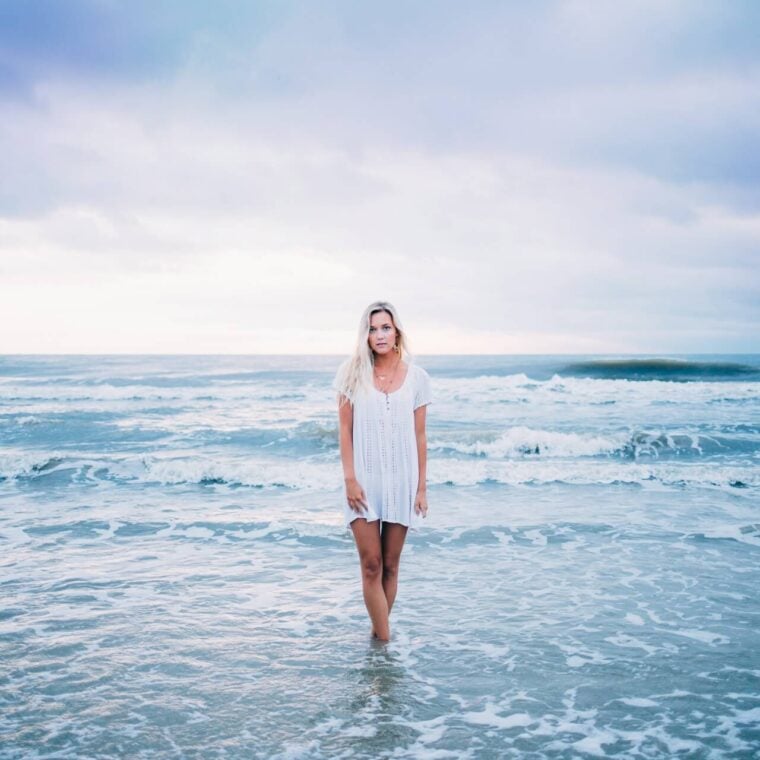

A cover up manufacturer makes the light garments worn over swimwear, gym wear, or summer outfits: cover-up dresses, tunics, beach shirts, swim cover-ups, and summer sets. This guide explains what cover up clothing is, the main types and the fabrics each needs, which ones suit Tirupur’s knit factories, and what to check before you order, based on more than 20 years of producing knitwear for summer and beach ranges.
What Is Cover Up Clothing?
Cover up clothing is a broad term for any garment worn over swimwear, exercise clothes, or other revealing outfits. It is worn for three reasons: to protect the skin from the sun, to add modesty when moving from the beach or pool to a café or hotel, and to complete a summer look. Cover-ups are designed to go on and off easily, dry fast, and pack light, so they are usually loose, breathable, and made in lightweight fabric. For brands, they sit naturally alongside swimwear, resort wear, and summer collections, which is why beach cover up manufacturers are usually asked for coordinated summer ranges, and why many make them as part of a wider summer collection.
Types of Cover Up Clothing
| Type | Typical Fabric | Construction | Made by The Synerg? |
|---|---|---|---|
| Cover-up dress | Cotton jersey, viscose jersey | Knit | Yes |
| Tunic | Cotton or viscose jersey, slub | Knit | Yes |
| Swim cover-up / hooded cover-up | Cotton terry, French terry | Knit | Yes |
| Beach shirt and summer set | Cotton jersey, pique, light knits | Knit | Yes |
| Sarong and pareo | Rayon, cotton voile | Woven | No |
| Kaftan and kimono | Rayon, chiffon, voile | Woven | No |
The split is about construction. Tirupur is a knitwear cluster, so knit cover-ups are where a beach wear factory here is strongest: soft, stretchy, and easy to wear. Woven wraps such as sarongs and kaftans are made in woven and printing clusters, often in Jaipur, Mumbai, and Bali, and a brand wanting both usually works with two suppliers.
Fabrics for Cover-Ups
The fabric decides how a cover-up feels, drapes, and dries. Cotton jersey is soft, breathable, and easy to care for, and suits everyday cover-up dresses and tunics. Viscose jersey drapes more fluidly and feels cool against the skin, which suits longer dresses and resort styles. Slub jersey adds a relaxed, textured look. Cotton terry and French terry absorb water, which is why they are used for hooded swim cover-ups worn straight out of the pool. Lighter GSMs keep the garment airy, but the fabric has to stay opaque over swimwear, so a sample in the final fabric and colour is essential. For more on the fabrics we use, see our clothing fabrics guide.
How to Choose a Cover Up Manufacturer
Beach wear manufacturers vary widely in what they can make, so start by deciding whether your range is knit, woven, or both, and choose a beach wear supplier that specialises in that construction. Check the fabric’s opacity over swimwear in daylight, not only under factory lights. Ask how the colours hold up to sun, salt water, and chlorine, especially for bright summer shades. Confirm the fit and length for each size, since loose cover-ups still need a controlled shape. Plan the delivery date around your summer season, because beach ranges sell in a short window, and a beach wear factory needs the order confirmed well before peak season. And approve a sample before bulk. Beach cover up manufacturers that also make tanks, crop tops, and summer basics can supply a coordinated range; see our list of womens tank top manufacturers, and for wider women’s ranges, our women’s clothing manufacturers in India page.
Our recommendation
Choose knit cover-ups for softness, stretch, and easy care, and plan woven wraps with a woven specialist. As a cover up manufacturer in Tirupur, we produce knit cover-up dresses, tunics, beach shirts, terry swim cover-ups, and summer sets from a minimum of 300 pieces per colour per style. US brands can see our summer and crop top production for the US. Send us your tech pack for a sampled quote.
Frequently Asked Questions
What is a cover up clothing?
Cover up clothing is a light garment worn over swimwear, gym wear, or other revealing outfits, for sun protection, modesty, or style. Common types include cover-up dresses, tunics, beach shirts, swim cover-ups, sarongs, and kaftans.
What fabric is best for a beach cover-up?
Cotton jersey and viscose jersey are soft, breathable, and drape well for cover-up dresses and tunics. Cotton terry suits swim cover-ups because it absorbs water. The fabric should be light but still opaque over swimwear.
What is the difference between a knit and a woven cover-up?
Knit cover-ups, such as jersey dresses and tunics, are soft, stretchy, and easy to care for. Woven cover-ups, such as sarongs and kaftans, are made from fabrics like rayon or voile and drape more loosely. They are usually made in different factories.
Where are cover-ups manufactured?
Knit cover-ups are made in knitwear hubs such as Tirupur in India, where most knit beach wear supplier capacity sits. Woven cover-ups such as sarongs and kaftans are often made in woven and printing clusters, including Jaipur and Mumbai in India and Bali in Indonesia.
What is the minimum order for cover-ups?
It varies by manufacturer. At The Synerg the standard minimum is 300 pieces per colour per style, confirmed against a physical sample before bulk.

About the Author: Karthik Shan
Karthik Shan is the founder and CEO of The Synerg, with 20+ years in the Tirupur textile hub. He publishes practical playbooks for brands on fabric GSM, costing (CM/CMT), AQL quality standards, and export-ready production.