
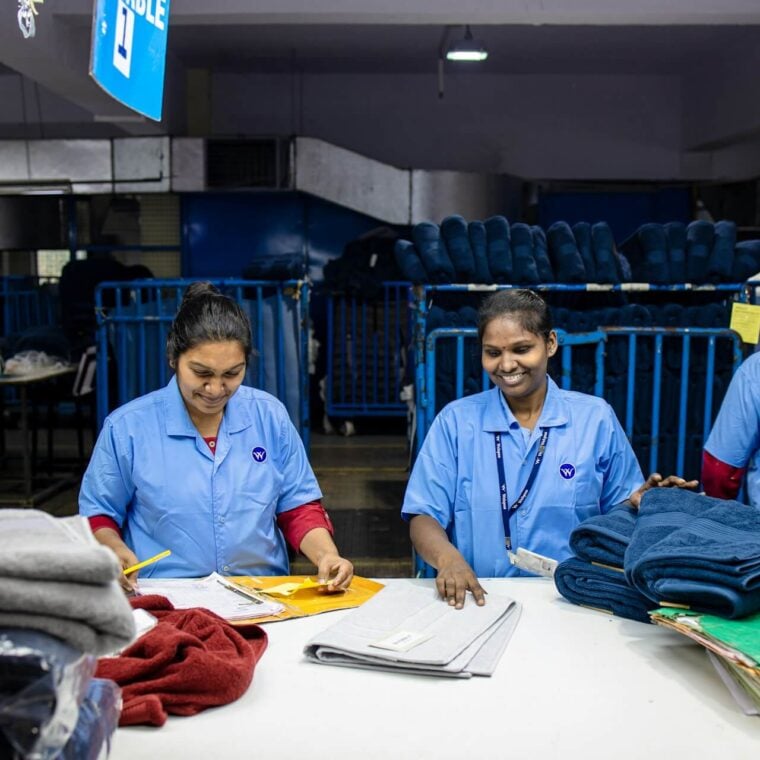

Knowing how to find the right garment buying office can save a brand months of failed samples and missed shipments. A good buying office chooses the right factories, controls quality on the floor, and keeps you informed; a poor one simply adds a margin between you and a factory you never see. This guide explains what a buying office does for a brand, how it compares with dealing directly with a manufacturer, where India’s buying offices are based, and seven steps to choose one, based on more than 20 years of working as both a manufacturer and a sourcing office based in Tirupur.
What a Garment Buying Office Does for a Brand
A buying office acts as your team on the ground in India. It finds and vets factories for your products, manages sampling and approvals, negotiates prices, places and follows up orders, checks quality during and after production, collects compliance documents, and coordinates shipping. For a brand without its own staff in India, it replaces what would otherwise be regular flights, time-zone emails, and blind trust in a factory’s updates. The value depends entirely on how well it does the unglamorous parts: inspecting on the factory floor, not just at the end, and telling you about problems before the shipment date rather than after.
Buying Office vs Direct Manufacturer vs Sourcing Agent
| Model | What You Get | Watch Out For | Best For |
|---|---|---|---|
| Buying office | Factory selection, QC, compliance, and shipping across several factories | Undisclosed factories, commission not in writing | Brands with several product categories and no team in India |
| Direct manufacturer | Direct control and one accountable factory | Limited to what that factory makes well | Focused ranges in one category |
| Sourcing agent | Introductions and some follow-up, often an individual | Little quality control, thin accountability | Early supplier search only |
| Manufacturer with sourcing office | Own factory for core products, vetted partners for the rest | Check which items are made in-house | Brands wanting one accountable partner across categories |
For a ranked comparison of the main options, see our list of top buying offices and sourcing agents in India, and for consultancy-led support, our guide to sourcing consultant companies in India.
Where India’s Buying Offices Are Based
Buying offices cluster where the factories are, so the right city depends on your product. Tirupur’s buying offices specialise in cotton knitwear: t-shirts, hoodies, sweatshirts, kidswear, and nightwear. A buying office in Coimbatore, 50 km away, often covers the same knitwear cluster as well as yarn and spinning, which suits brands that want control from the fibre stage. A buying office in Bangalore usually works with the large export factories there, for high-volume programmes and sportswear. A buying office in Chennai tends to combine garments with leather and footwear, helped by the city’s port. And a buying office in Delhi, or elsewhere in the NCR, is the natural choice for fashion, woven, and embellished garments. If your range spans several categories, a buying office in one hub may subcontract to another, so ask where each item will actually be made.
How to Find the Right Garment Buying Office: 7 Steps
1. Define Your Product and Volume
Be clear about your categories, fabrics, quantities per style, and target prices before you start. A buying office that is perfect for 20,000-piece knit programmes may be the wrong partner for 500-piece fashion drops.
2. Match the Office to the Cluster
Choose an office based where your product is made best: Tirupur or Coimbatore for knitwear, a buying office in Delhi for fashion and woven, or a buying office in Bangalore for large programmes. An office far from your product’s cluster will rely on others.
3. Ask Which Factories They Use
A good buying office names its factories and lets you visit them. If it will not tell you where your garments are made, you cannot check quality, compliance, or capacity, and you will not know if production is moved without your approval.
4. Check How They Control Quality
Ask for a sample inspection report. Look for inline checks during production as well as a final AQL inspection, with measurements, photos, and defect counts, not just a pass or fail.
5. Review Compliance Documents
Ask for the audit reports and certificates of the factories they would use, such as SMETA, GOTS, or OEKO-TEX, and verify them in the certifying body’s own database.
6. Speak to Brands in Your Market
Ask for two or three references from brands of a similar size in your own market, and ask them how problems were handled, not just whether orders arrived.
7. Put the Terms in Writing
Agree the commission or fee, what it covers, who pays for rework or air freight if a delay is the factory’s fault, how payments flow, and who owns your patterns and samples. Clear terms protect both sides.
Red Flags When Choosing a Buying Office
Be cautious if an office will not name or show its factories, sends only perfect sample photos with no production updates, has no written inspection reports, is vague about its commission, or promises that it can make anything at any quantity. The most expensive sentence in garment sourcing is “we can make anything”.
Our recommendation
The simplest way to find the right garment buying office is to choose it the way you would choose a factory: by product specialisation, transparency about where your garments are made, written quality reports, and references from brands like yours. The Synerg works as both a manufacturer, with its own garment factory in Tirupur, and a sourcing office with a vetted network of certified partner factories, so we can tell you exactly where each item is made. UK brands can see our clothing manufacturing for UK brands. Tell us what you need and we will explain how we would source it.
Frequently Asked Questions
What does a garment buying office do?
A garment buying office acts as a brand’s team in the sourcing country. It finds and vets factories, manages samples and approvals, negotiates prices, follows up orders, inspects quality, collects compliance documents, and coordinates shipping.
Is a buying office better than working directly with a manufacturer?
It depends on your range. A buying office suits brands with several product categories and no team in India, while a direct manufacturer suits focused ranges in one category. A manufacturer with its own sourcing office can offer both.
How do I know if a buying office is just a middleman?
Ask which factories it uses and whether you can visit them, ask for written inline and final inspection reports, and ask for references from brands in your market. An office that cannot show these adds little beyond a margin.
Where are buying offices located in India?
Buying offices are based in the main garment clusters: Tirupur and Coimbatore for knitwear, Bangalore for large export programmes, Chennai for garments with leather and footwear, and Delhi NCR for fashion and woven garments.
How are buying offices paid?
Most buying offices charge a commission, usually a percentage of the order value, or a fee for defined services. Agree in writing what the commission covers and who pays for rework or delays.

About the Author: Karthik Shan
Karthik Shan is the founder and CEO of The Synerg, with 20+ years in the Tirupur textile hub. He publishes practical playbooks for brands on fabric GSM, costing (CM/CMT), AQL quality standards, and export-ready production.