
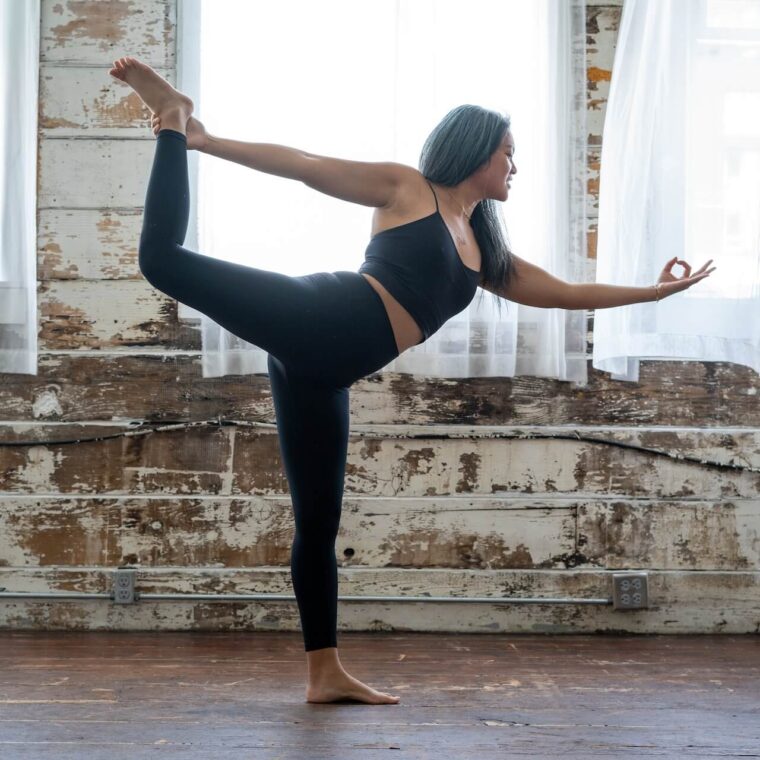

The best leggings manufacturers in India combine two things buyers can feel straight away: a fabric that stretches and recovers without going thin, and seams and a waistband that stay put through wear and washing. This guide lists the legging manufacturers in India worth knowing, explains where leggings are made around the world and how they are produced, and compares the main legging fabrics, based on more than 20 years of knitwear production in Tirupur, including a 2026 order where a buyer switched fabric after seeing our cotton.
A Real Order: Poly-Cotton or Cotton-Lycra?
In 2026, a buyer from Sweden came to us wanting leggings in a 50% polyester, 50% cotton blend. Before sampling, we showed them our standard 95% cotton, 5% lycra fabric. They were impressed with the quality of the cotton, its softness and the way it stretched and recovered, and they chose the cotton-lycra fabric for the order instead of the poly-cotton blend. The lesson is to feel the fabric before fixing the specification: a blend chosen on paper is not always the best choice once the options are in hand. For how the elastane percentage changes stretch and fit, see our guide to elastane and lycra blends.
Top Leggings Manufacturers in India
The list opens with our own factory, then covers other established legging makers in India, including large domestic brands with their own manufacturing and exporters producing for private label.
1. The Synerg – Tirupur
The Synerg leads this list as one of the best legging manufacturers for private label brands, producing leggings in 95% cotton, 5% elastane at 160 to 180 GSM, alongside polyester-elastane styles for gym ranges. We make full-length, capri, and cycling-length leggings with elastic or fold-over waistbands and stretch seams, cut, sewn, and checked in our own factory, from a minimum of 300 pieces per colour per style. For yoga ranges, see our yoga legging manufacturer page.
2. Twin Birds – Tirupur
A well-known Tirupur legging brand with its own manufacturing, producing a wide range of women’s leggings in cotton and stretch blends.
3. Lux Industries (Lyra) – Kolkata
A large Indian knitwear company whose Lyra brand is one of the country’s best-known legging ranges, produced at very high volume.
4. Dollar Industries (Dollar Missy) – Kolkata
A major Indian knitwear manufacturer producing leggings under its women’s brand, with large-scale knitting and processing.
5. Page Industries – Bengaluru
A large Indian knit manufacturer with deep experience in comfort and stretch knitwear, including leggings, at scale.
6. Poppys Knitwear – Tirupur
A Tirupur exporter producing knitted garments for women, men, and children, suited to cotton stretch bottoms.
7. SP Apparels – Tamil Nadu
A knitwear exporter supplying global retailers, with the compliance systems large private label programmes need.
8. KPR Mills – Tirupur region
A yarn-to-garment group with integrated knitting and processing, suited to high-volume cotton knitwear programmes.
Where Are Leggings Manufactured?
Leggings are manufactured mainly in Asia, with each country strong in different fabrics. India, especially Tirupur, is strong in cotton-elastane leggings, soft combed cotton, and private label production to a brand’s own spec. China leads in high-performance polyester and nylon leggings and in very large volumes. Vietnam produces performance leggings for many international sportswear brands, and Bangladesh supplies high-volume basic leggings for mass retail. So where leggings are manufactured best for your brand depends on the fabric: cotton-rich leggings suit India, and technical synthetic leggings often suit China or Vietnam.
How Leggings Are Made
The fabric comes first. Leggings need a knit with enough stretch and recovery to move with the body and spring back, and enough density to stay opaque when stretched. The fabric is knitted, dyed, and finished, then relaxed before cutting so it does not shrink after sewing. Pieces are cut with the stretch running the right way, because a legging cut off-grain twists on the leg. The seams are sewn with stretch stitches, usually flatlock for a flat, comfortable seam or four-thread overlock for strength. The waistband is either an enclosed elastic band or a fold-over band, and many styles add a gusset for comfort and movement. Finally, every batch is checked for measurements, stretch and recovery, and opacity when stretched, which is the test buyers care about most. For seamless leggings, which are knitted to shape rather than cut and sewn, see our guide to seamless clothing.
Legging Fabrics Compared
| Fabric | Feel | Best For |
|---|---|---|
| 95% cotton, 5% elastane (160 to 180 GSM) | Soft, breathable, natural | Everyday, lounge, and yoga leggings |
| 50% polyester, 50% cotton | Firmer, lower stretch | Budget basics |
| Polyester with elastane | Smooth, quick-drying | Gym and training leggings |
| Nylon with elastane | Silky, strong compression | High-performance and compression |
Gym leggings manufacturers in India often combine a polyester-elastane fabric with a high waistband and flatlock seams; for gym ranges, see our custom gym clothing manufacturers page, and for the wider sportswear picture, our list of custom athletic apparel manufacturers.
How to Choose Legging Manufacturers in India
Ask for a fabric swatch and feel it before you fix the blend, as the Swedish buyer did. Stretch the sample and check that it stays opaque, and ask how the manufacturer tests stretch and recovery. Confirm the GSM, the seam type, and the waistband construction, and check whether a gusset is included. Agree the measurements for every size, since leggings depend on a close fit. For any manufacture of leggings at volume, confirm the minimum per colour and style and approve a washed sample before bulk. US brands can see our yoga and leggings production for the US.
Our recommendation
Choose the fabric by feel and use: cotton-elastane for everyday and yoga leggings, polyester or nylon with elastane for gym and compression. As one of the best leggings manufacturers in India for private label, we produce cotton-elastane leggings at 160 to 180 GSM and performance styles from a minimum of 300 pieces per colour per style. Send us your tech pack for a sampled quote.
Frequently Asked Questions
Who are the best leggings manufacturers in India?
Well-known legging manufacturers in India include The Synerg, Twin Birds, Lux Industries (Lyra), Dollar Industries (Dollar Missy), Page Industries, Poppys Knitwear, SP Apparels, and KPR Mills. The right choice depends on whether you want your own private label range or a large-scale basic programme.
Where are leggings manufactured?
Leggings are manufactured mainly in Asia. India, especially Tirupur, is strong in cotton-elastane leggings; China leads in performance polyester and nylon leggings; Vietnam produces performance leggings for many sportswear brands; and Bangladesh supplies high-volume basic leggings.
What fabric is best for leggings?
For everyday and yoga leggings, 95% cotton and 5% elastane is soft, breathable, and comfortable. For gym and training leggings, polyester with elastane dries faster, and nylon with elastane gives the strongest compression.
What GSM is used for leggings?
Weights vary by style and fabric. We run our cotton-elastane leggings at 160 to 180 GSM, and the fabric should always be checked for opacity when stretched.
How are leggings made?
The fabric is knitted, dyed, finished, and relaxed, then cut with the stretch running the right way. Pieces are sewn with stretch seams such as flatlock or overlock, a waistband and often a gusset are added, and each batch is checked for fit, stretch, recovery, and opacity.

About the Author: Karthik Shan
Karthik Shan is the founder and CEO of The Synerg, with 20+ years in the Tirupur textile hub. He publishes practical playbooks for brands on fabric GSM, costing (CM/CMT), AQL quality standards, and export-ready production.