
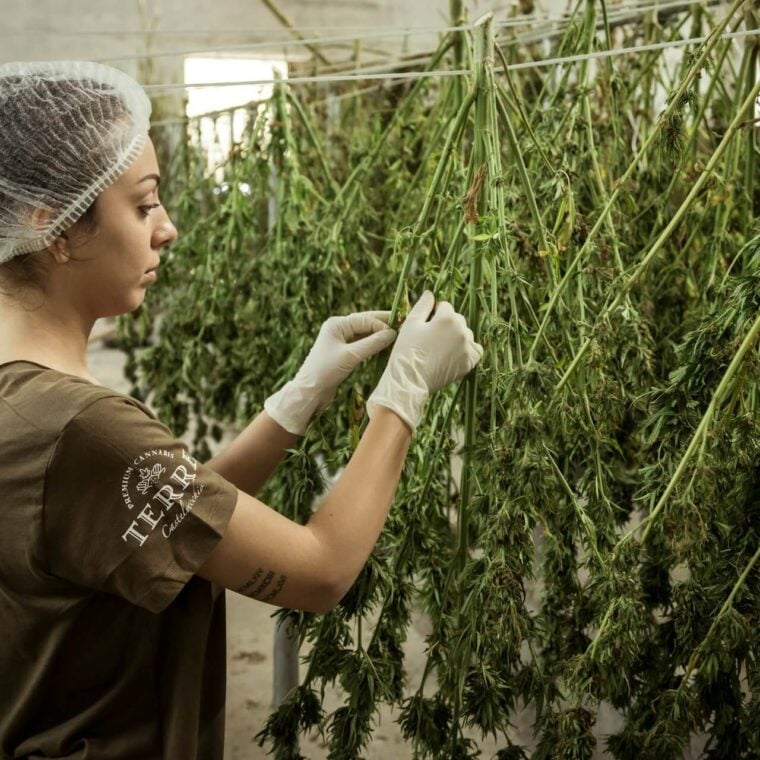

The Synerg is a hemp clothing manufacturer in India, producing hemp-cotton blend t-shirts through our vetted partner factory in Tirupur. If you are looking for hemp clothing manufacturers who will tell you the truth about the fibre, the blend and the real cost, this page covers both: how to work with us on a hemp order, and the honest fabric knowledge behind it.
Hemp Clothing Manufacturers in India: Working With Us
Genuine hemp manufacturing is a specialist job, not something every cotton factory can take on, and it is worth being straight about what an order actually looks like before you commit to it.
We manufacture hemp as a 50/50 hemp-cotton single jersey at 180 GSM, knitted through our vetted partner factory that sources and handles the imported hemp yarn properly. The commercial terms reflect the fibre. The minimum order quantity is 1,000 pieces per style, higher than our standard cotton knit minimum, because the hemp yarn is imported in bulk and a smaller run does not make sense against that import. The lead time is 90 days from a confirmed purchase order, longer than a cotton order for the same reason: the yarn has to be brought in before anything can be knitted.
Those two numbers, 1,000 pieces and 90 days, are the honest floor for a hemp order in India, and any manufacturer quoting you a 300 piece hemp run at a standard cotton lead time is either using a token amount of hemp or has not thought through the yarn. If your project fits a 1,000 piece minimum and a 90 day timeline, hemp-cotton is a genuinely good fabric to build on, and we would be glad to quote it. Send us your hemp requirement and we will come back with a real costing.
What Is Hemp Fabric Made Of?
Hemp fabric is made from the bast fibres in the stalk of the hemp plant, Cannabis sativa. The fibres are extracted from the woody core through a process called retting, then cleaned, spun into yarn and knitted or woven into fabric. It is one of the oldest textile fibres in use, and it has a genuinely strong set of properties.
Hemp is stronger than cotton and long-lasting, so garments hold up to repeated wear. It is naturally breathable and regulates temperature well, which suits warm climates. It uses less water, less land and fewer pesticides to grow than conventional cotton, which is the basis of its sustainability claim. And unlike raw hemp, which is coarse, modern processing and blending give it a hand that softens with every wash while keeping its strength.
Why Hemp Clothing Is Almost Always a Blend
Here is the part most hemp marketing leaves out. Pure 100% hemp fabric is coarse, stiff and difficult to work into a comfortable garment, and it is expensive. That is why nearly all wearable hemp clothing on the market is a blend, most commonly hemp with cotton, which keeps hemp’s strength and breathability while adding the softness and stretch that make a garment comfortable to wear against the skin.
We produce hemp as a 50/50 hemp-cotton single jersey at 180 GSM. That blend and that weight are a deliberate choice. The cotton half brings the softness and the drape a t-shirt needs, the hemp half brings the strength, the breathability and the sustainability story, and at 180 GSM the fabric has enough body to hold its shape and take a print without becoming heavy.
We do not produce 100% hemp. The price and the yarn make it impractical for the vast majority of orders, and rather than take that work and deliver a stiff, costly garment, we say so plainly. If your range specifically requires pure hemp, we are honest that a hemp-cotton blend is what we make and what we would recommend.
How Hemp Clothing Is Manufactured in India, and Why It Costs More
This is the honest cost picture, because it is the question a serious buyer actually has.
India is a cotton country. The Tirupur cluster is built around cotton knitwear, and hemp is not a fibre that India spins at commercial scale for apparel. In practice the hemp yarn is imported, and that import is the single biggest reason hemp clothing costs what it does. A 50/50 hemp-cotton tee costs significantly more to produce than the same tee in 100% cotton, and the gap comes almost entirely from the yarn, not from the making.
So when you see hemp clothing priced close to cotton, it is worth asking what the actual hemp content is, because a token percentage of hemp in a mostly-cotton fabric is a very different thing from a true 50/50 blend. The honest version of hemp manufacturing in India is that it is a specialist, blended, import-dependent product, and it is produced through vetted factories that handle the imported yarn properly rather than through general capacity.
We knit our hemp-cotton blend through our vetted partner factory for exactly that reason. The Synerg operates its own cotton knit unit in Tirupur, and specialist fibres like hemp are produced through the partner network that has the yarn sourcing and the handling in place.
Hemp Fabric Properties at a Glance
| Property | Hemp (and hemp-cotton blend) |
|---|---|
| Strength | Stronger than cotton, highly durable |
| Breathability | Excellent, regulates temperature, suits warm climates |
| Sustainability | Less water, land and pesticide than conventional cotton |
| Feel | Coarse when pure, soft and comfortable when blended with cotton, softens with washing |
| Typical construction | 50/50 hemp-cotton single jersey, 180 GSM for t-shirts |
| Cost | Meaningfully higher than cotton, driven by imported hemp yarn |
| Minimum order | 1,000 pieces per style |
| Lead time | 90 days from confirmed purchase order |
Producing hemp-cotton and organic t-shirts
We knit hemp-cotton blend t-shirts through our vetted partner factory. See our t-shirt manufacturing, read about our organic and sustainable production, or understand the organic cotton certifications serious buyers ask for.
Frequently Asked Questions
Who are the hemp clothing manufacturers in India?
Hemp clothing in India is made by a small number of specialist manufacturers who work with imported hemp yarn, usually as a hemp-cotton blend, since India does not spin hemp at scale. The Synerg produces a 50/50 hemp-cotton single jersey at 180 GSM through its vetted partner factory in Tirupur, with a minimum order of 1,000 pieces and a 90 day lead time.
What is the MOQ and lead time for hemp clothing manufacturing?
For hemp-cotton production the minimum order is 1,000 pieces per style and the lead time is 90 days from a confirmed purchase order. Both are higher than a standard cotton order because the hemp yarn is imported in bulk before knitting can begin.
What is hemp clothing made of?
Hemp clothing is made from the bast fibres in the stalk of the hemp plant, Cannabis sativa. The fibres are extracted through retting, spun into yarn and knitted or woven into fabric. Most wearable hemp clothing is blended with cotton to improve softness and comfort.
Is hemp clothing usually pure hemp or a blend?
Almost always a blend. Pure 100% hemp is coarse and expensive, so the common construction is a hemp-cotton blend, often 50/50, which keeps hemp’s strength and breathability while adding the softness of cotton.
Why is hemp clothing more expensive than cotton?
The main reason is the yarn. In India hemp yarn is largely imported, because the country spins cotton at scale but not hemp, and that imported yarn makes a hemp-cotton tee cost significantly more than the same garment in pure cotton. The extra cost is in the fibre, not the making.
Is hemp fabric manufactured in India?
Hemp garments are manufactured in India, but usually from imported hemp yarn rather than domestically spun hemp, and typically as a hemp-cotton blend. It is a specialist, blend-based product produced through factories set up to source and handle the imported yarn.
What GSM is a hemp t-shirt?
A hemp-cotton t-shirt is commonly knitted at around 180 GSM in single jersey, which gives enough body to hold shape and take a print while keeping the fabric breathable and comfortable in warm weather.
Is hemp clothing sustainable?
Hemp is one of the more sustainable natural fibres, using less water, land and pesticide than conventional cotton. When blended with organic cotton the sustainability profile improves further, which is why hemp-cotton appeals to eco-conscious brands.

About the Author: Karthik Shan
Karthik Shan is the founder and CEO of The Synerg, with 20+ years in the Tirupur textile hub. He publishes practical playbooks for brands on global sourcing, cotton knitwear, fabric GSM, and export-ready production.